Celiogen Literature Search: Evidence Backed Medical Answers
Complex clinical questions rarely have answers in a single source. They require evidence from guidelines, clinical studies, drug information, and current medical literature, and the challenge is connecting that evidence to the clinical context. Celiogen Literature Search turns that process into a structured research workflow.
From a clinical question to a research plan
A complex case can contain several questions at once. Consider a patient with sepsis, acute kidney injury on CKD, hyperkalemia, atrial fibrillation, heart failure, hyperglycemia, thrombocytopenia, and multiple medications. Instead of treating the case as one broad search query, Celiogen can break the investigation into the individual clinical problems that require evidence. It can identify areas such as: Sepsis and septic shock management, Acute kidney injury and CKD, Severe hyperkalemia, Atrial fibrillation with rapid ventricular response, Heart failure management, Hyperglycemia, Thrombocytopenia and bleeding risk, Drug–drug interactions. Each problem becomes a research direction that can be investigated separately and then brought back into the clinical context.
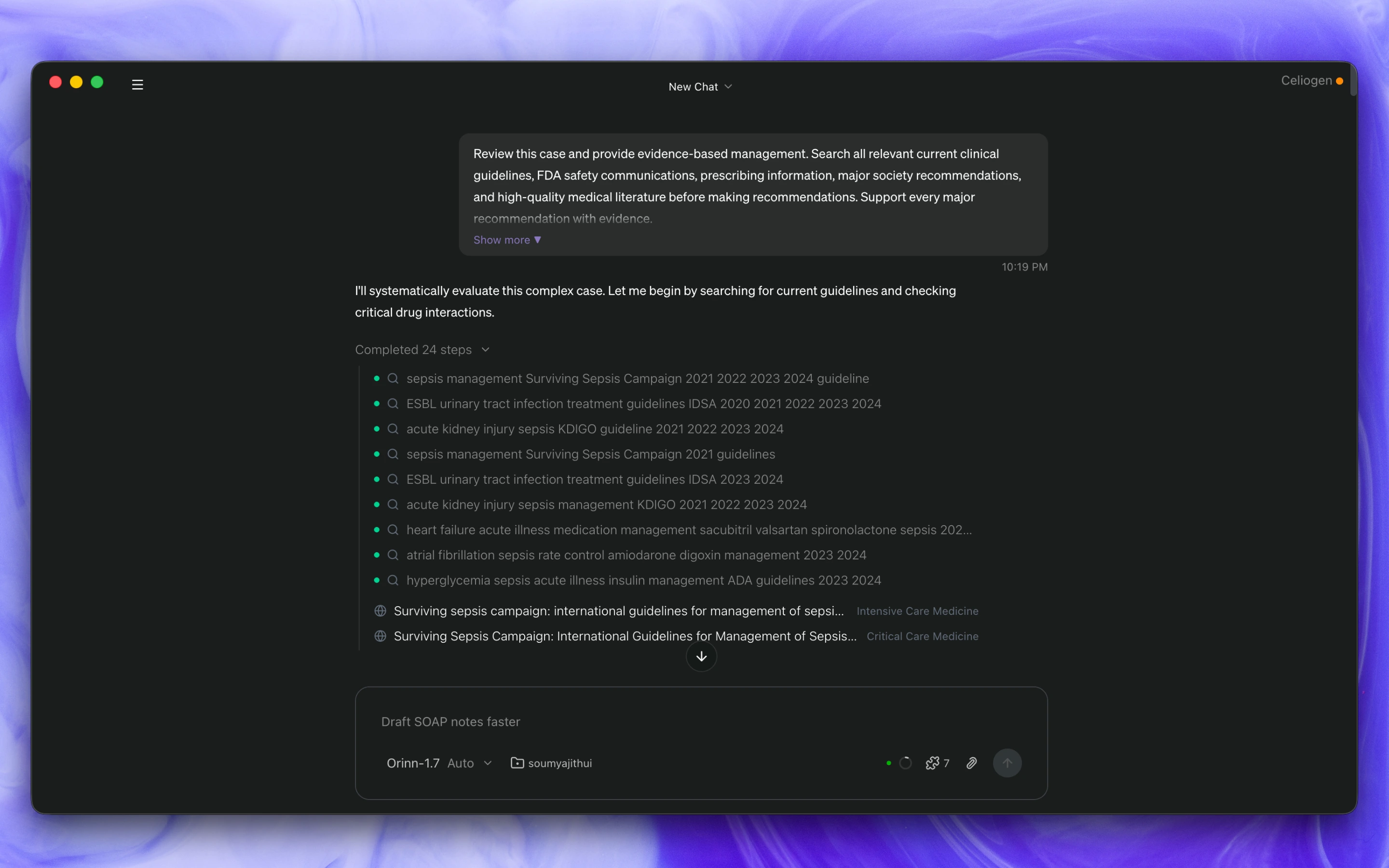
Celiogen decomposes a complex clinical case into targeted research questions and executes the investigation across multiple steps.*
This is the first important difference: the clinical context determines what needs to be searched.
Search across the evidence that matters
Once the clinical problems are identified, the research requires more than a single type of publication. Celiogen can investigate relevant clinical guidelines, peer-reviewed research, systematic reviews, regulatory information, prescribing information, and other authoritative medical sources depending on the question. The resulting evidence can then be organized around the specific clinical problems identified earlier. For example, a medication-related question may require prescribing information and safety communications, while a treatment question may require current society guidelines and clinical studies. This allows the evidence search to follow the nature of the clinical question, rather than forcing every question through the same search strategy.
Evaluate the evidence, not just the publication
Finding a study is not enough. Its design and position in the evidence hierarchy matter. Celiogen can surface the Oxford Centre for Evidence-Based Medicine (OCEBM) level of evidence for relevant literature.
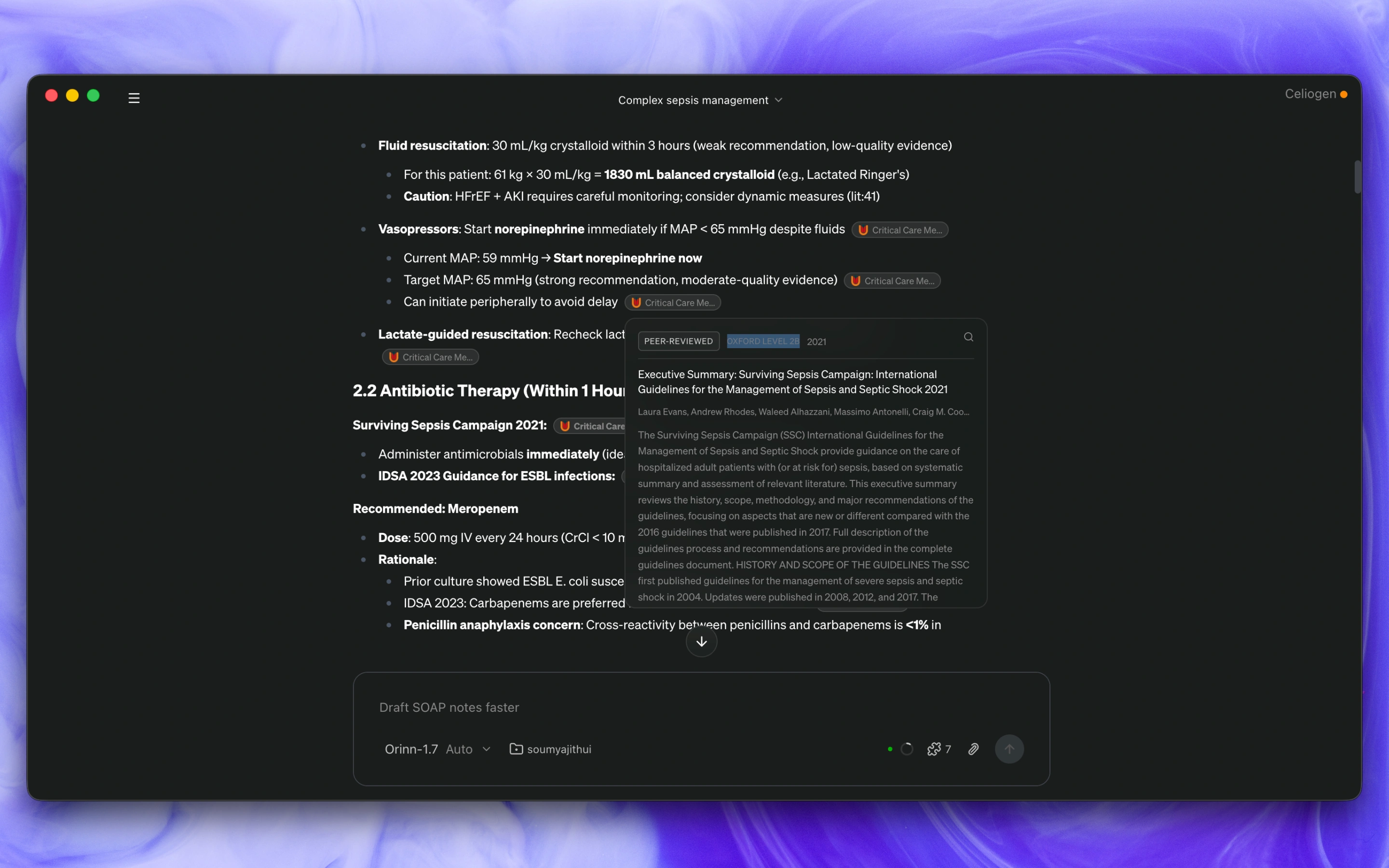
This provides additional context when comparing studies. For example, a systematic review of randomized controlled trials and an individual observational cohort study may both address the same clinical question, but they represent different levels of evidence. Seeing the evidence level alongside the publication helps the researcher understand what type of evidence they are looking at before interpreting its findings. The Oxford classification is not a substitute for critical appraisal. Study quality, applicability, population, methodology, and limitations still need to be considered.
Inspect the source in context
A search result tells you what was found. The next step is understanding the publication itself. Celiogen lets researchers open an individual source directly from the literature workflow. The source popup provides additional publication context without taking the researcher away from the investigation.
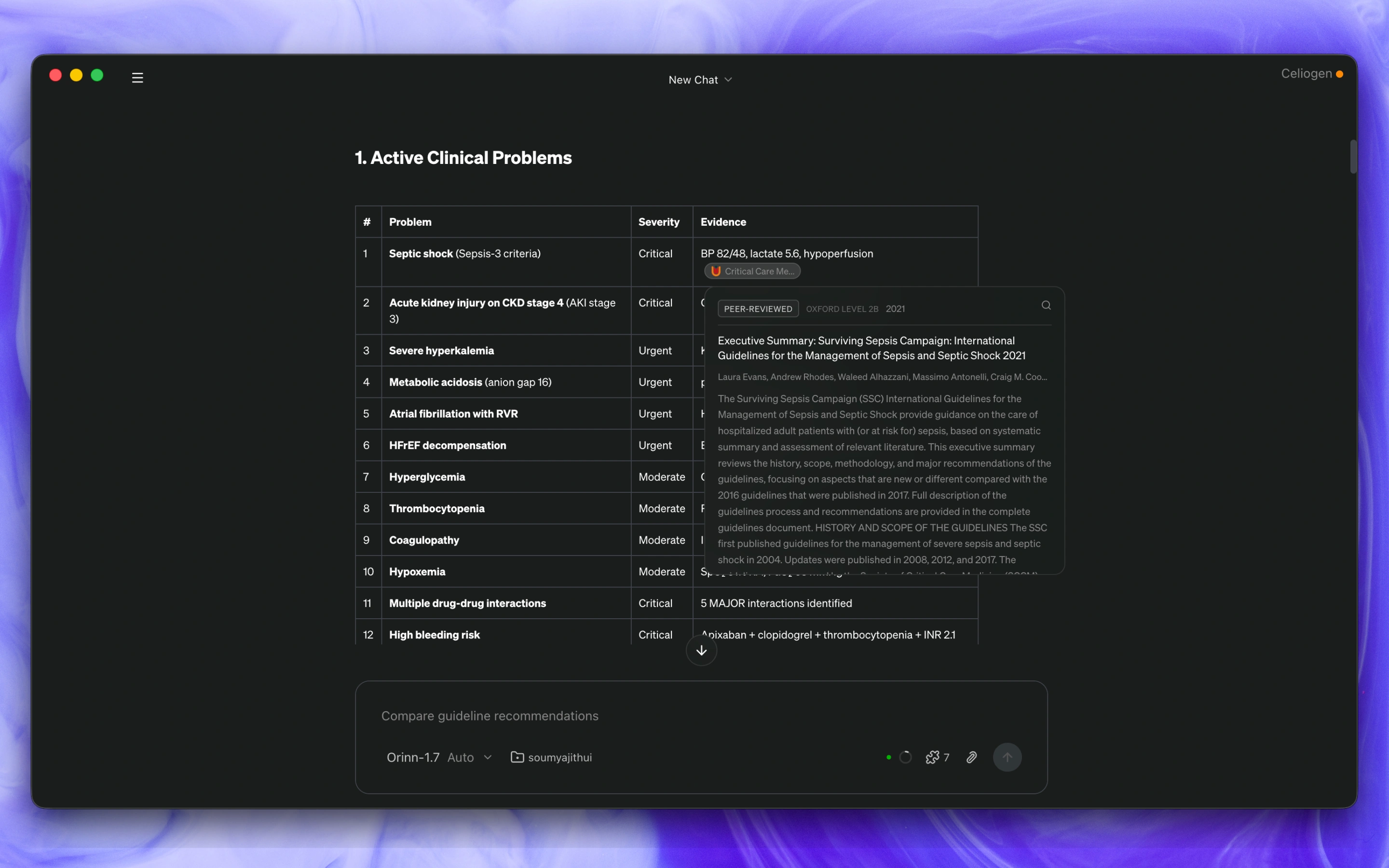
This is useful when multiple publications address a similar clinical question. Researchers can inspect individual sources, compare the available evidence, and decide which studies require deeper review, all while keeping the original research question in context.
Continue the investigation
Clinical research rarely ends with the first search. A finding can create another question. A guideline can reveal a disagreement with newer research. A study can raise questions about a particular patient population or treatment approach. Celiogen allows the researcher to continue from the existing investigation and narrow the next search based on what has already been discovered.
Connect recommendations to the underlying evidence
After the literature has been investigated, Celiogen can organize the findings around the active clinical problems. For the example case, the resulting research can connect specific management considerations to the evidence supporting them.
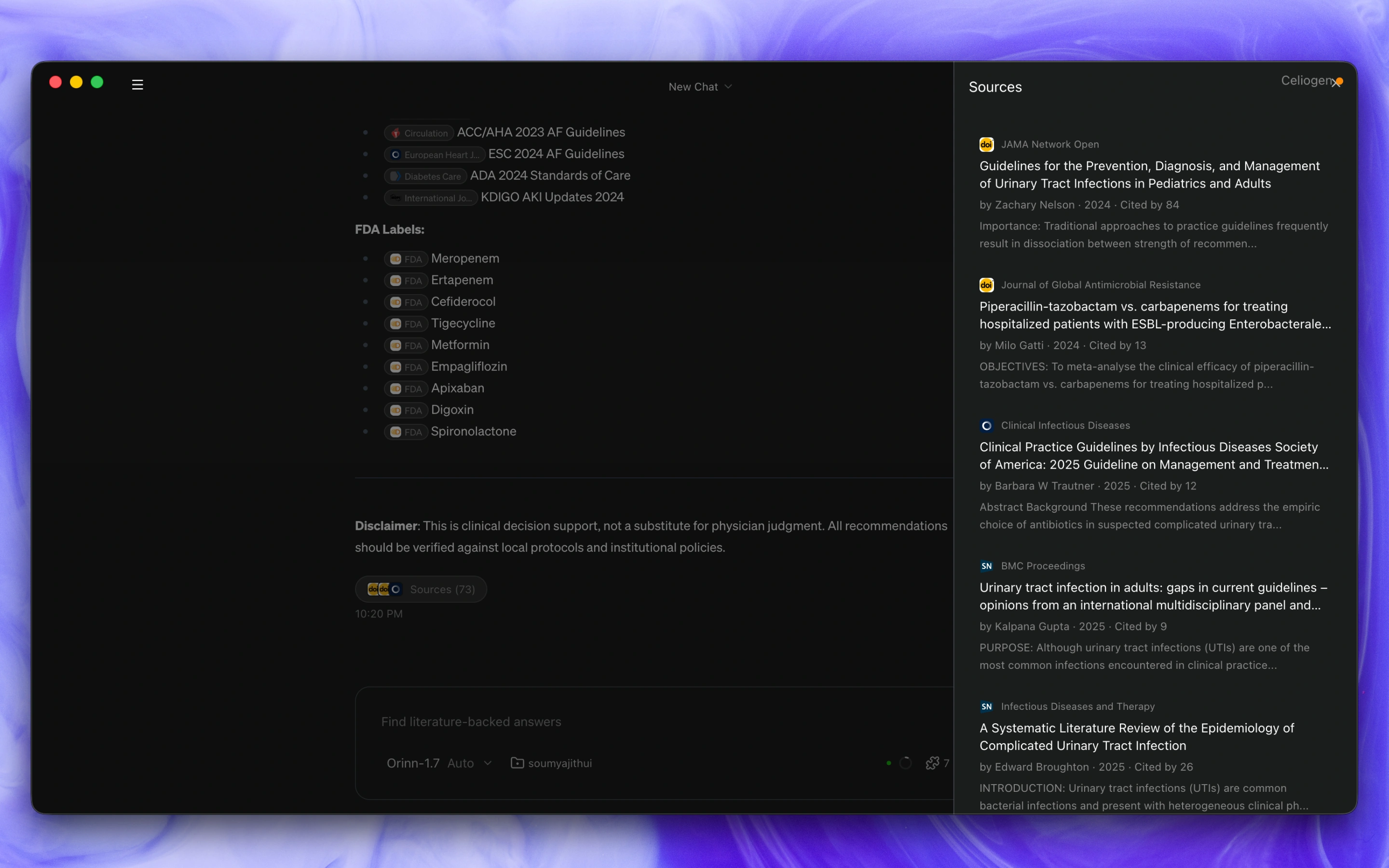
This makes it possible to move from a clinical problem to the relevant evidence without manually reconstructing that relationship across multiple browser tabs. The workflow becomes:
Clinical problem → Targeted evidence → Evidence level → Clinical interpretation
The physician can then review the underlying publications and determine whether the evidence applies to the patient in front of them.
Built for the questions that don't fit into one search
Clinical research becomes difficult when a question crosses multiple sources, evidence types, and clinical problems. Celiogen brings those pieces into a single investigation: it breaks down the clinical problem, searches the relevant literature, surfaces evidence levels and publication context, and organizes the findings around the problems being investigated. The result is not another place to collect medical papers. It is a research environment built around the clinical question itself. That is the distinction Celiogen Literature Search is designed to make. This is much stronger because it doesn't introduce a new claim, doesn't repeat the whole article, and ends on the actual product differentiation.
Disclaimer: Celiogen is an AI copilot for physicians, not a replacement for clinical judgment. Its outputs and cited evidence should be reviewed by qualified professionals and interpreted within the relevant clinical, institutional, and regulatory context.